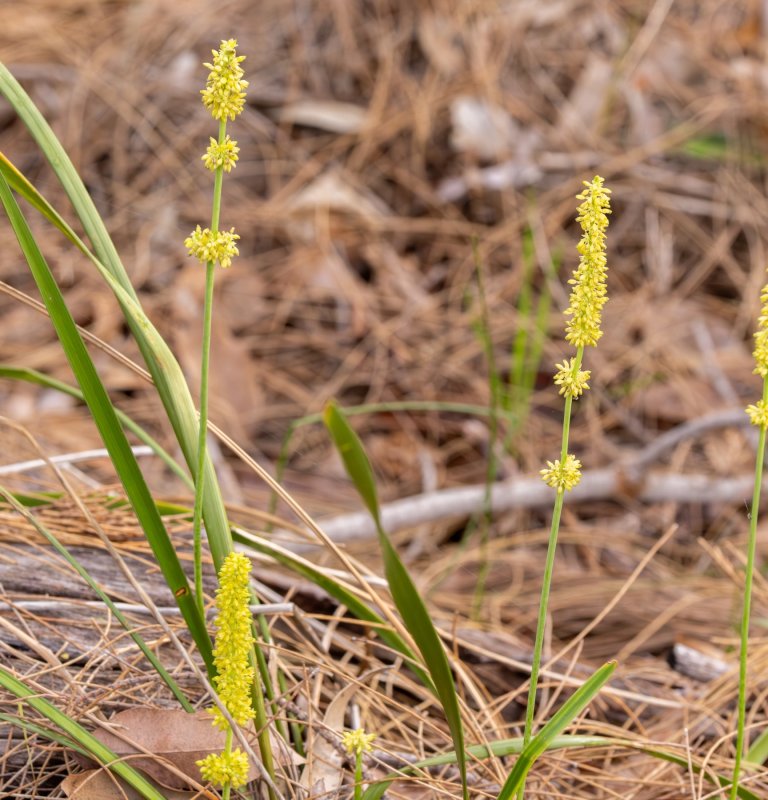
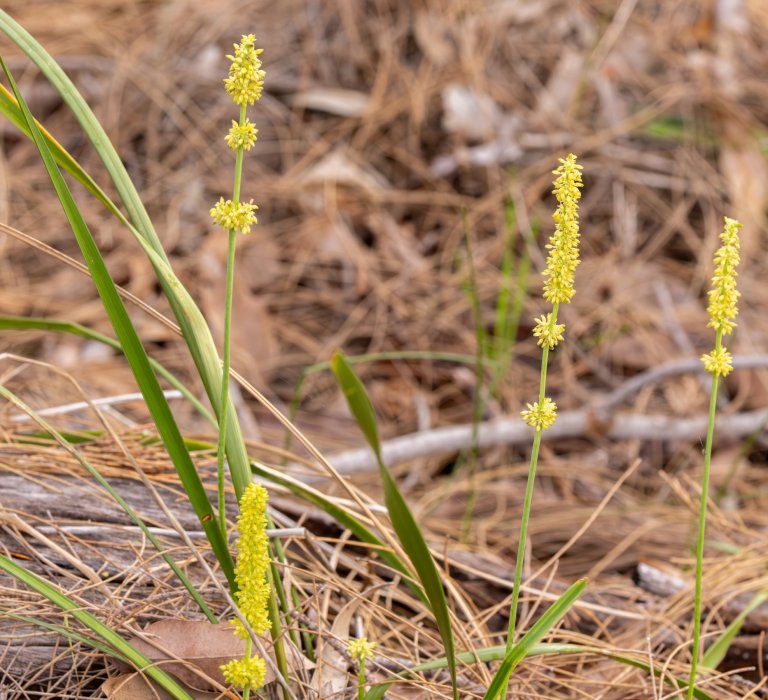
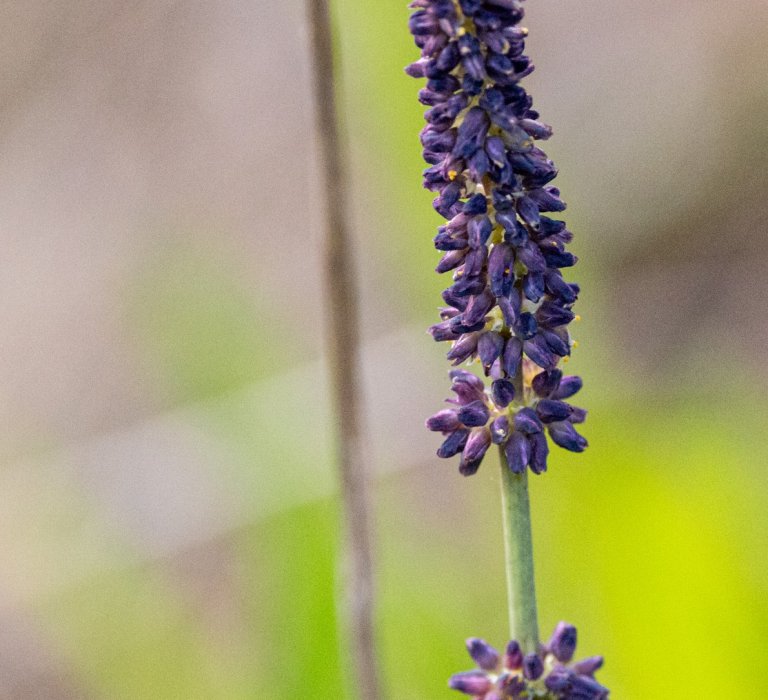
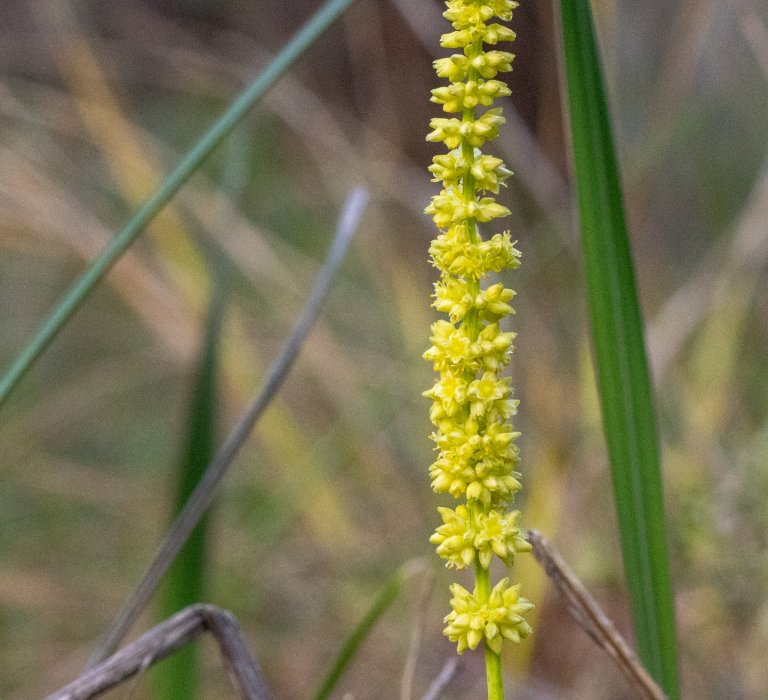
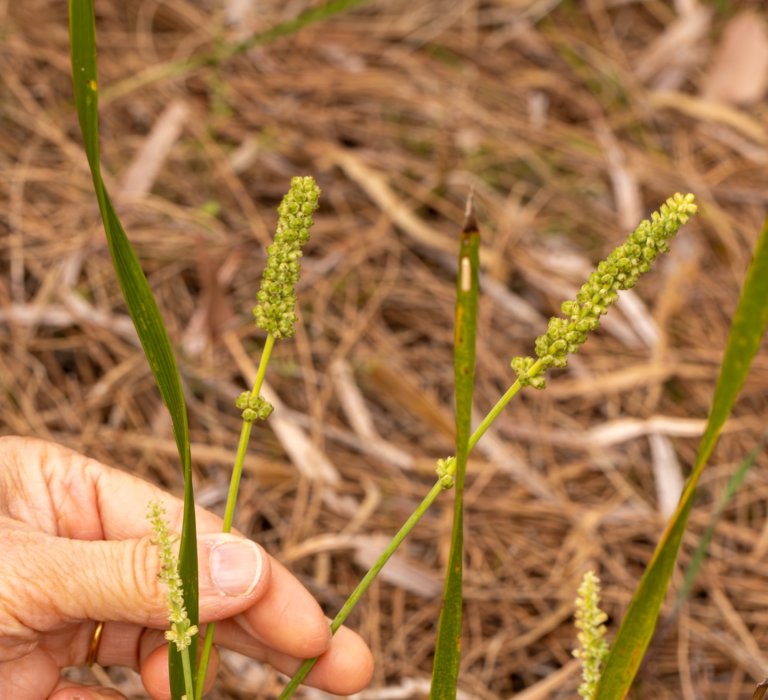
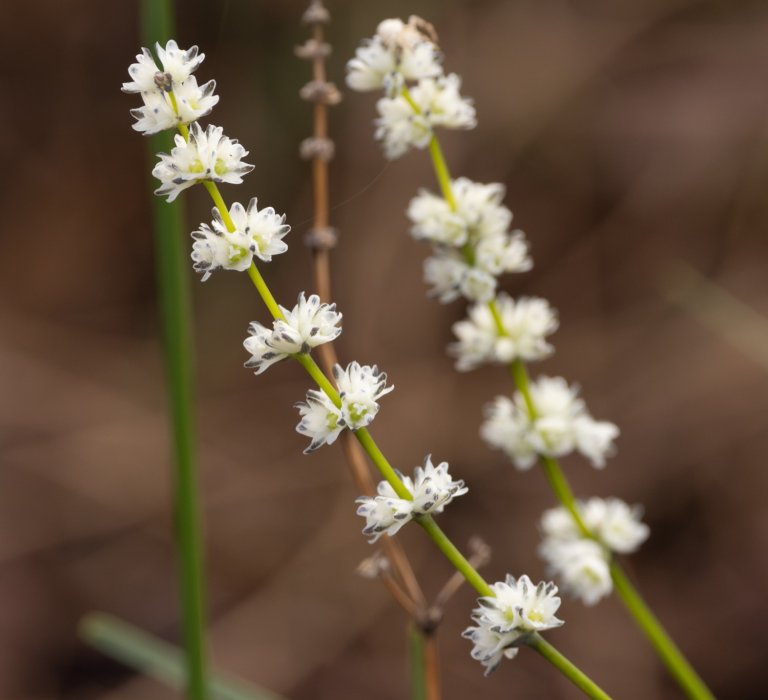
If you go walking in the Kings Park bushland in winter you’ll come across these grass-like perennials – Lomandra preissii – commonly known as Preiss’ mat rush.
They are between 20 and 60 centimeters tall with an inflorescence (a group or cluster) of purplish or yellow-green coloured flowers. They are generally dioecious, in other words they have either male or female flowers on separate plants. The female flowers are stalkless while male flowers are smaller, stalked and more bell-shaped. Flowers are pollinated by beetles and native bees. Ants harvest and distribute the seeds.
Despite their grasslike appearance Lomandra are classified as herbs. They are tufted with long narrow blade-like leaves that arise from a central stemless base and have thick woody rhizomes and fibrous roots. A rhizome is the main stem of the plant that runs underground horizontally.
The white starchy rhizome of the Lomandra were chewed by Aboriginal people. The seed was pounded and made into flour or eaten whole and mixed with native honey. The strappy leaves were used to weave baskets for carrying food, tying things together as well as making eel traps and nets.
There are 51 species of Lomandra, all of which are native to Australia. The name Lomandra comes from the Greek, ‘loma’ meaning edge or border and ‘aner’ meaning man or male. This refers to the borders on the anthers of the stamen of some species.
Lomandras have had various family placements over the past decades, such as Xanthorrhoeaceae, Dasypogonaceae and Laxmanniaceae. However currently they are placed in the family Asparagaceae.
Join one of our seasonal walks through the bush land of Kings Park this winter and Spring to see Lomandra and other bushland gems!
Other news you may also like
Guides’ plant of the month for March
1 March 2026Visitors to many Perth parks at present (including Kings Park) are enjoying views of...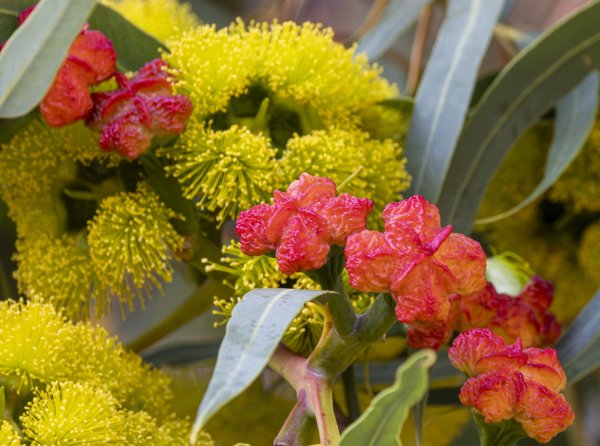
This Valentines Day why not visit the ‘Turner of Hearts’?
12 February 2026Verticordias – turn heads and hearts The Botanic Garden has a variety of Verticordias...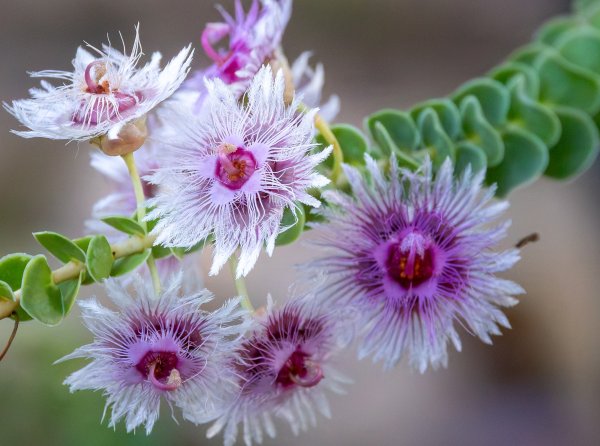
Guides’ plant of the month for February
2 February 2026February’s plant is the Mountain White Gum, Eucalyptus mooreana. It is found in North...