 Georgie Wilson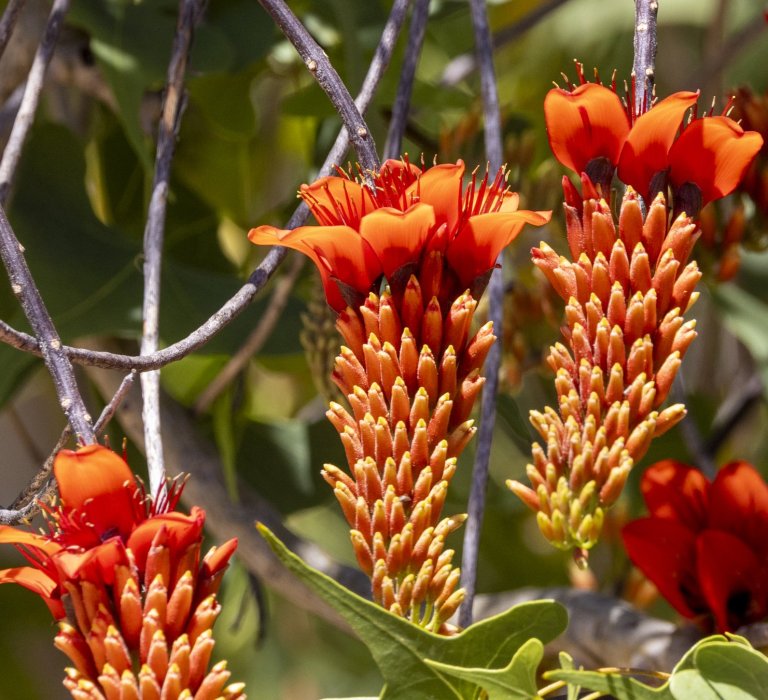
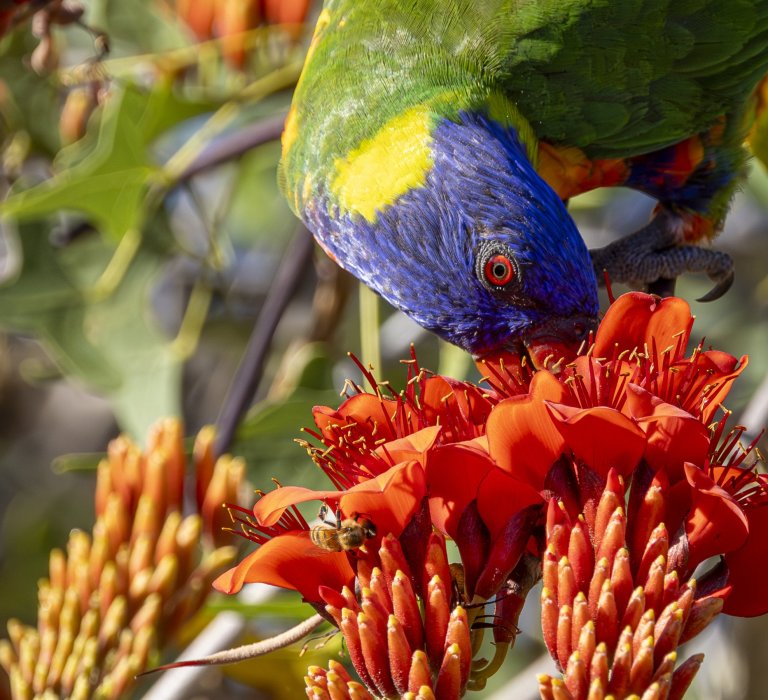
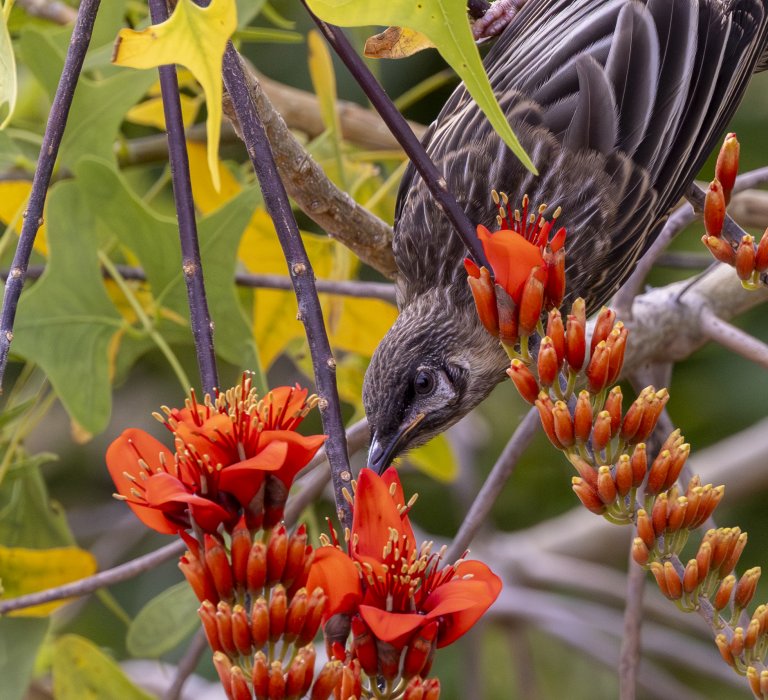
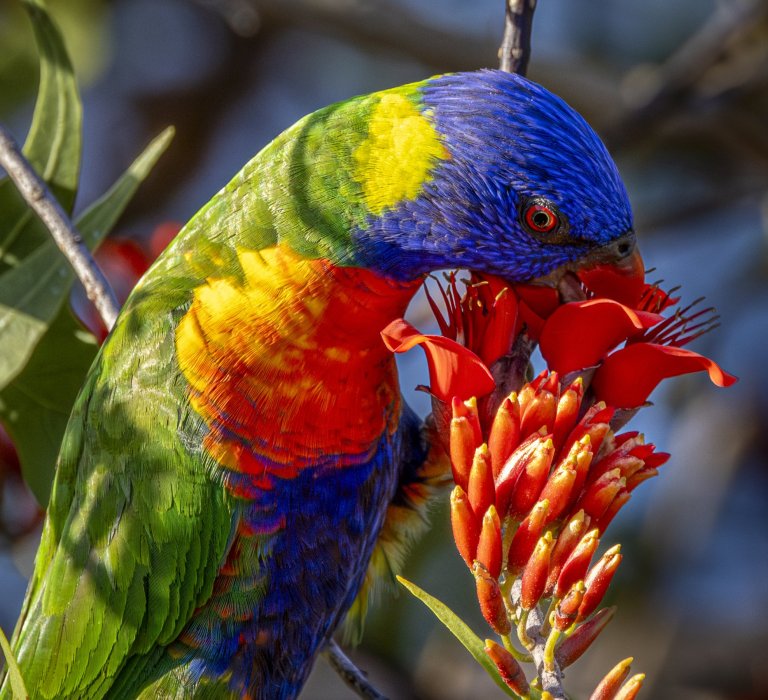

Erythrina vespertilio or Yulbah tree
As with many of our plants, the scientific name of the Erythrina vespertilio gives a clue to its appearance: Erythrina meaning ‘red’, referring to the flower and vespertilio meaning ‘bat-like’. One of the common names of the plant is bat-wing coral tree and another is Yulbah. It has many other indigenous names depending on language group.
The Yulbah is a deciduous tree native to north Western Australia from Carnarvon to the Kimberley, as well as the Northern Territory, Queensland, and northern parts of South Australia and New South Wales. It grows around 3 to 15 metres tall along gorges, rivers and creeks.
As the name suggests, the leaves are shaped like a flying bat’s wings and are 10-15 cm long. The Yulbah has orange to dark red bean-like seeds which appear in pods about 6-12 cm long.
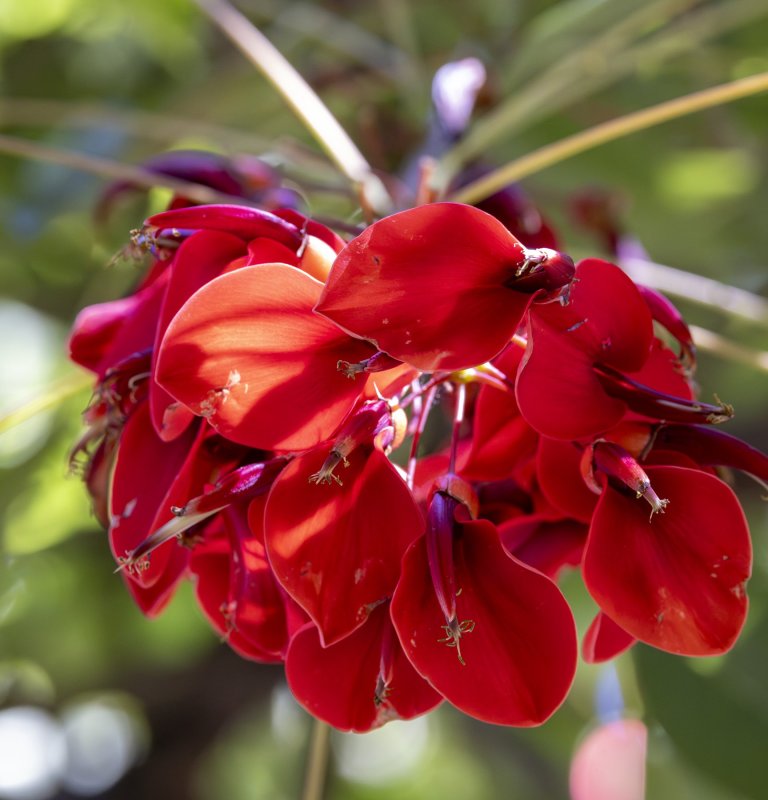
The spectacular bright scarlet flowers of the Yulbah appear in August and September in its native regions and in the Botanic Garden it flowers in December and January. Flowering usually occurs when the tree is leafless.
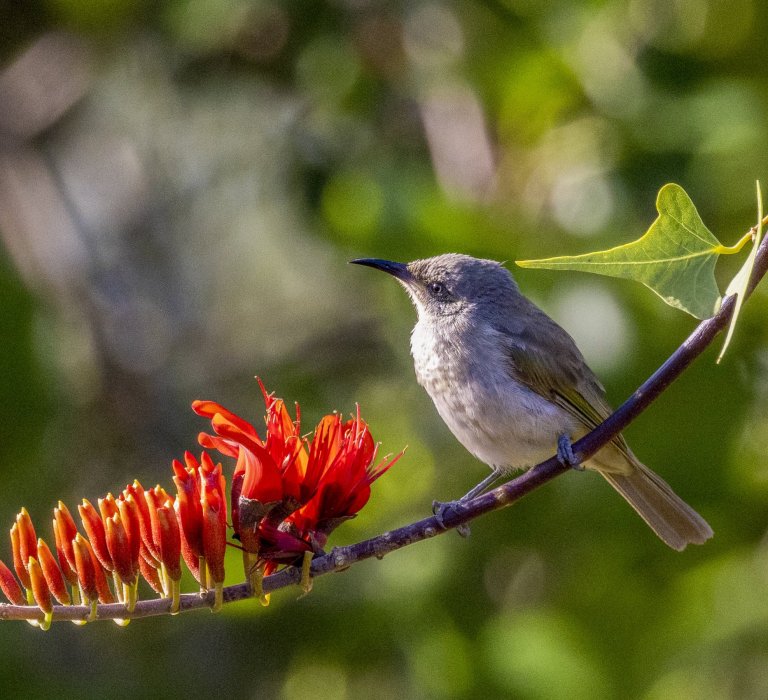
Like other red-flowering plants, the Yulbah’s flowers are highly attractive to birds such as honey-eaters, rainbow lorikeets and parrots. You can see the Yulbah tree in the Kimberley beds in the Botanic Garden. Join one of our twice-daily free guided walks or see the Guides in the Visitor Information Centre and ask where you can find it.
Other news you may also like
This Valentines Day why not visit the ‘Turner of Hearts’?
12 February 2026Verticordias – turn heads and hearts The Botanic Garden has a variety of Verticordias...
Guides’ plant of the month for February
2 February 2026Mountain White Gum – Eucalyptus mooreana February’s plant is the Mountain White Gum, Eucalyptus...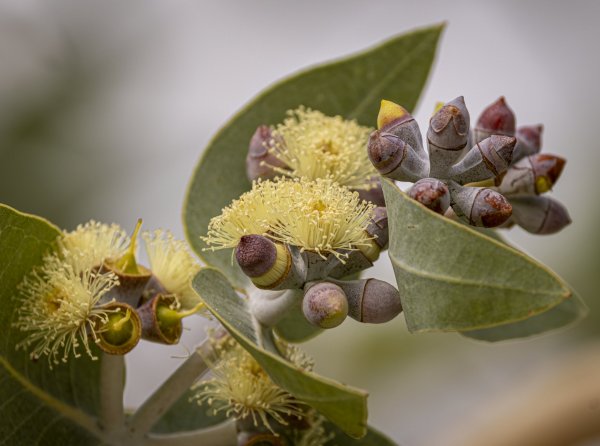
Season’s Greetings from Kings Park Guides
19 December 2025Red is the colour of the Noongar season of Birak. Red is also the...